

Estate planning is a complex process, not a standardized product with a set price. Every trust must be tailored to the individual’s goals, assets, family dynamics and tax situation. This is especially true in Florida, where state-specific laws can significantly impact how trusts are structured and administered. According to a recent article from Forbes, “If You’re Asking What a Trust Costs, You’re Already on the Wrong Path,” a truly effective plan requires defining objectives, evaluating various trusts and estate planning strategies, and then creating a personalized structure.
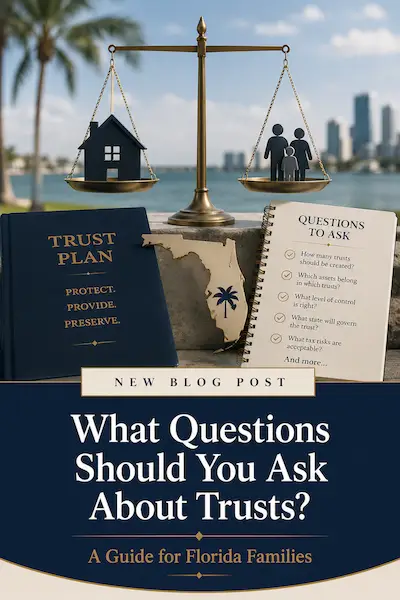
There’s no such thing as a standard, packaged, one-size-fits-all trust. The number of different provisions and language used in any document is considerable. When beginning the planning process, here are some of the questions to ask:
- How many trusts should be created?
- Which assets belong in which trusts?
- Should the transfer of assets be structured as gifts, sales, or some combination of the two?
- What level of control should beneficiaries have?
- Similarly, what level of control should the settlor creating the trust have?
- What state will govern the trust, and how do that state’s laws impact what the trust can and cannot do? For Florida residents, understanding the state’s trust and probate laws is a critical part of the planning process.
- What tax risks are acceptable, including state and local gift, estate, inheritance, and income taxes?
Any estate plan and trust evolve as these questions are explored, refined and aligned with the person’s goals. There are more questions to consider: the structure of the trust, whether to use one or several trusts, in which jurisdiction to establish the trust, and whether to incorporate charitable planning into the overall estate plan.
For individuals and families in Tampa and throughout Florida, working with an experienced estate planning attorney helps ensure your plan reflects your unique circumstances while complying with Florida law. A well-crafted trust should protect your assets, minimize unnecessary complications, and support your long-term legacy goals.
Some people like to simplify things. However, while this may seem like an easier solution, doing so may also end up costing heirs far more in the future. A simple plan may be more vulnerable to taxes, creditor claims, or internal family disputes.
Using pricing comparisons for estate planning and trusts can lead to a poorly designed plan with poor outcomes. What appears to be a lower-cost plan can often be far more costly in the long run. That’s why many families in Tampa choose to focus on the value of comprehensive planning rather than simply comparing prices.
Yes, cost matters. However, it should be considered after all of the objectives are clear, not before. A better question to ask is: “What are we trying to accomplish—and what’s the best way to achieve it?” When your estate plan is designed around your goals and tailored to Florida law, you’re investing in peace of mind for yourself and your loved ones.
Reference: Forbes (June 28, 2026), “If You’re Asking What a Trust Costs, You’re Already on the Wrong Path.”