

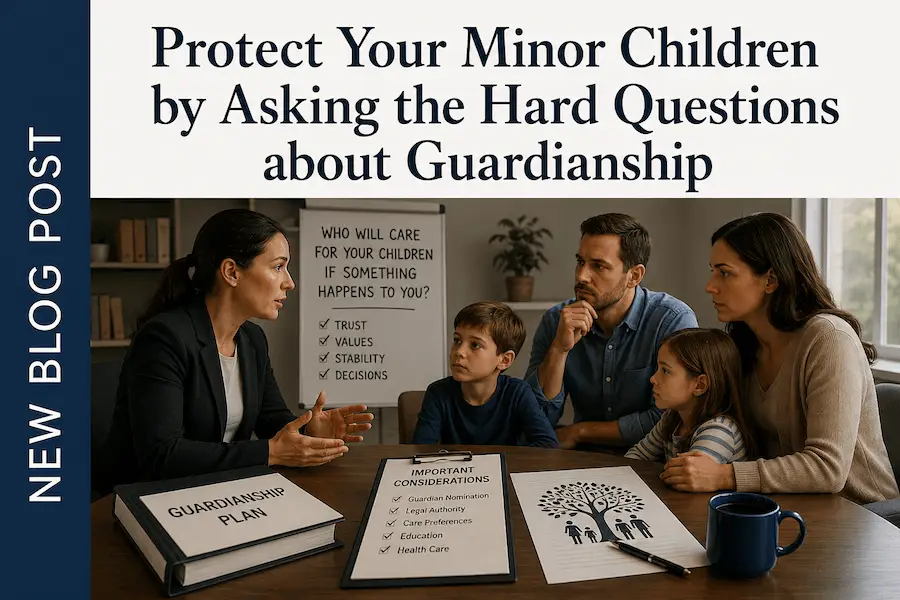

Protect Your Minor Children by Asking the Hard Questions About Guardianship
For many Tampa Bay parents, summer brings exciting milestones. High school graduations, college acceptances, first apartments, and young adults beginning the next chapter of their lives are all reasons to celebrate.
Yet alongside those exciting moments comes an important question that many families avoid:
If something happened to you tomorrow, who would raise your children?
Estate planning is often associated with wills, trusts, and passing assets to loved ones. While those tools are important, one of the most significant decisions parents can make is determining who would care for their minor children if they were no longer able to do so.
It is not an easy conversation. In fact, many parents delay making guardianship decisions because the topic feels uncomfortable or overwhelming. Unfortunately, avoiding the discussion can leave some of the most important decisions about your children’s future in the hands of a court.
Why Guardianship Planning Matters
Without a legally documented guardianship plan, a judge may ultimately decide who will raise your children if both parents pass away or become incapacitated.
While courts work diligently to serve a child’s best interests, they cannot fully understand your family’s unique dynamics, values, traditions, or parenting philosophies. The people you would choose to raise your children may not be obvious to someone reviewing your family’s circumstances from a courtroom.
A well-designed guardianship plan provides clarity during a crisis and helps prevent family conflict at a time when loved ones are already dealing with grief and uncertainty.
Most importantly, it allows parents—not the court system—to make one of the most important decisions their children may ever face.
Looking Beyond Love and Good Intentions
Many parents immediately think of a sibling, close friend, or relative when considering potential guardians. While those relationships may be strong, guardianship decisions require looking beyond emotional connections alone.
Parents should consider:
- The potential guardian’s health and age
- Financial stability and career demands
- Parenting style and family values
- Geographic location
- Existing family obligations
- Emotional readiness to take on long-term responsibility
For Tampa Bay families, location can be especially important. Would your children remain in the same schools, sports programs, churches, and community activities they know today? Or would they face a major relocation during an already difficult transition?
These practical considerations deserve thoughtful discussion before any legal documents are signed.
Questions Every Parent Should Ask
Choosing a guardian often means asking difficult questions long before they are needed.
Consider:
- Does this person share our values and priorities?
- How would they approach education, discipline, and extracurricular activities?
- Would siblings remain together?
- How would extended family relationships be maintained?
- Does this person have the time, support system, and resources necessary to raise children?
The answers are rarely simple, but they can provide invaluable guidance when making these decisions.
Legal Planning and Financial Planning Must Work Together
Naming a guardian is only one piece of the puzzle.
Parents should also ensure that financial resources are available to support their children and the individuals caring for them.
Trusts for Minor Children
Many families use trusts to manage assets left to children. Trusts can provide structure, protect inheritances, and ensure funds are available for education, healthcare, housing, and daily living expenses.
Rather than leaving a large inheritance directly to a young beneficiary, trusts allow parents to establish guidelines for how and when funds should be used.
Choosing the Right Fiduciaries
In some situations, parents may choose one person to serve as guardian and another to serve as trustee. This separation can provide accountability while allowing each person to focus on their respective responsibilities.
Selecting these decision-makers requires careful thought and open communication.
Don’t Forget Your Young Adults
As graduation season arrives across Tampa Bay, many parents are surprised to learn that once a child turns 18, parents generally lose the automatic legal authority to make healthcare and financial decisions on that child’s behalf.
Whether your graduate is heading to the University of South Florida, Florida State, the University of Florida, trade school, military service, or their first job, basic legal documents can help ensure parents are able to assist during emergencies.
At Smylie Legacy Law, we offer an Adulting Package designed specifically for young adults that includes:
- Healthcare Surrogate Designation
- Durable Financial Power of Attorney
- HIPAA Authorization and Release
These simple documents can provide peace of mind for both parents and young adults as they begin their independent lives.
Review Your Plan Regularly
Life changes. Relationships evolve. Financial circumstances shift. Children grow older.
The guardian who feels like the perfect choice today may not be the right choice five or ten years from now.
Estate plans should be reviewed regularly to ensure they continue to reflect your family’s goals and circumstances.
Making Difficult Decisions Before They Are Needed
No parent wants to imagine a future where someone else raises their children.
But estate planning is not about expecting the worst. It is about protecting the people you love most and ensuring that, no matter what happens, your children are cared for by people you trust and according to values you have chosen.
By asking the hard questions today, you can provide clarity, stability, and protection for your family tomorrow.
Key Takeaways
- Guardianship planning allows parents, not courts, to decide who will raise their children.
- Practical factors such as parenting style, location, and stability should be carefully considered.
- Financial planning and guardianship planning should work together.
- Young adults over 18 need their own healthcare and financial decision-making documents.
- Regular reviews help keep plans aligned with changing family circumstances.
The greatest gift a parent can leave behind is not simply financial security, it is the confidence that their children will be cared for by the right people, in the right way, when it matters most.
Reference: Forbes Finance Council (March 16, 2026) “Stress-Test Your Estate Plan: Evaluating Guardianship and Authority”